


How to Stop Cat Shedding Fast at Home
If you constantly find fur on your couch, clothes, and floors, you are not alone. Many pet owners in the USA search for ways to stop cat shedding because daily hair cleanup feels endless. While shedding is natural, excessive fur often signals poor grooming, diet issues, stress, or underlying health concerns. The good news is that you can dramatically reduce loose hair with the right approach.
Understanding how to stop cat shedding starts with recognizing why cats shed in the first place. Once you address the root cause, you can control the problem instead of chasing fur around your home.
Why Cats Shed and What’s Normal
Shedding plays a vital biological role. Cats lose old or damaged hair to make room for new growth. However, indoor lifestyles, artificial lighting, and climate control often change natural shedding cycles.
The Cornell Feline Health Center explains how coat cycles work and why seasonal shedding occurs at http://www.vet.cornell.edu/departments-centers-and-institutes/cornell-feline-health-center. Most cats shed year-round, but spring and fall bring heavier hair loss.
If you want to master how to stop cat shedding, you must first identify whether shedding is normal or excessive.
Seasonal Shedding vs. Health-Related Hair Loss
Seasonal shedding produces uniform fur loss without bald patches. Health-related shedding often includes redness, itching, or thin spots.
The ASPCA outlines common coat and skin issues at http://www.aspca.org/pet-care/cat-care/common-cat-problems. If your cat scratches constantly or develops bald areas, schedule a veterinary exam before focusing solely on grooming.
Healthy shedding responds well to proper brushing and a balanced diet. Medical shedding requires professional care.
The Fastest Way to Reduce Loose Cat Hair
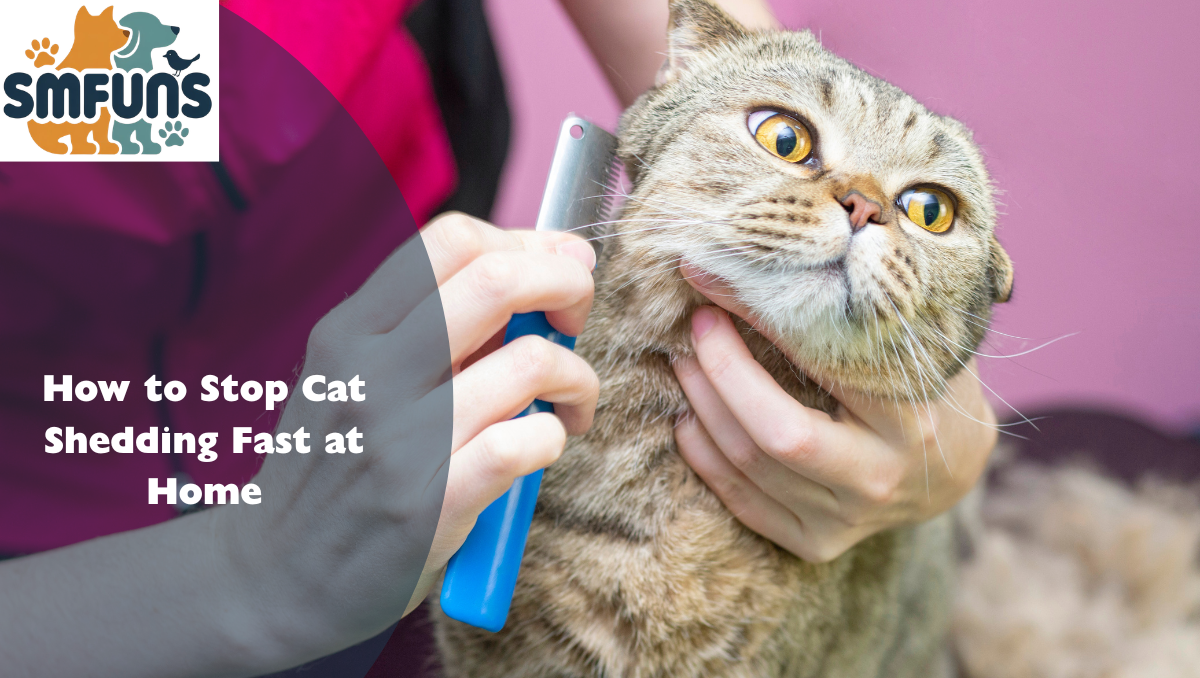
If you need immediate results, focus on daily grooming. Brushing removes loose fur before it lands on your furniture.
Choose the Right Brush for Your Cat’s Coat
Short-haired cats need rubber grooming brushes or fine-bristle tools. Long-haired breeds require slicker brushes and undercoat combs.
The American Veterinary Medical Association highlights routine grooming as essential preventive care at http://www.avma.org/resources-tools/pet-owners/petcare/basic-care. Using the correct tool dramatically improves results.
When pet owners ask how to stop cat shedding quickly, the answer often begins with upgrading to a better grooming brush.
High-quality grooming tools from SMFuns gently remove undercoat fur without irritating the skin. Durable materials also prevent breakage and uneven pulling.
Brush More Frequently During Heavy Shedding
Daily brushing during seasonal changes removes large amounts of loose hair. Consistency matters more than pressure. Gentle strokes protect skin and distribute natural oils.
PetMD explains how brushing improves coat health at http://www.petmd.com/cat/grooming. Better coat health means less uncontrolled shedding.
Nutrition’s Role in Shedding Control
Coat condition reflects internal health. Poor-quality diets often lead to dull fur and increased hair loss.
Omega-3 and Omega-6 Fatty Acids
Essential fatty acids support skin hydration and follicle strength. Dry skin increases shedding.
The Cornell Feline Health Center discusses nutritional influences on coat health at http://www.vet.cornell.edu/departments-centers-and-institutes/cornell-feline-health-center.
If you want long-term success in stopping cat shedding, evaluate your cat’s diet. High-protein formulas with balanced fatty acids improve coat resilience.
Hydration and Skin Elasticity
Dehydration worsens dry skin. Encourage water intake with fresh bowls or fountains. Proper hydration strengthens follicles and reduces breakage.
Healthy skin equals less excessive shedding.
Bathing Cats to Reduce Shedding
Many owners avoid bathing cats. However, occasional baths help remove loose hair and dander.
When Bathing Helps
Bathing benefits long-haired breeds or cats with heavy seasonal shedding. It also helps allergy-sensitive households.
The ASPCA provides bathing guidance at http://www.aspca.org/pet-care/cat-care/cat-grooming-tips.
Use only cat-specific shampoos. Human products disrupt skin pH and increase dryness.
Premium grooming shampoos from SMFuns cleanse gently while maintaining natural oils. That balance prevents post-bath shedding spikes.
Drying Properly Matters
Towel drying removes additional loose hair. Some cats tolerate low-heat pet dryers. Always avoid high heat.
Gentle drying reduces residual shedding inside your home.
Managing Stress to Reduce Hair Loss
Stress triggers excessive grooming. Over-grooming leads to hair thinning.
VCA Animal Hospitals explains behavioral causes of hair loss at http://vcahospitals.com/know-your-pet/hair-loss-in-cats.
If you explore how to stop cat shedding, assess environmental stressors. Loud noises, routine changes, or new pets increase anxiety.
Provide scratching posts, hiding spots, and stable feeding schedules. Calm cats shed less from stress-related grooming.
Medical Conditions That Increase Shedding
Some shedding signals underlying illness.
Parasites and Skin Infections
Fleas cause itching and hair loss. The CDC outlines parasite prevention at http://www.cdc.gov/healthypets/pets/cats.html.
Regular flea prevention protects both coat and household hygiene.
Hormonal Imbalances and Allergies
Hormonal issues or food allergies can cause excessive shedding. PetMD discusses allergic skin disease in cats at http://www.petmd.com/cat/conditions/skin.
If grooming and diet adjustments fail, consult your veterinarian.
Understanding medical triggers ensures that your plan to stop cat shedding addresses the root cause.
Controlling Shedding Inside Your Home
Even with grooming, some shedding continues. Therefore, manage your environment strategically.
Use washable furniture covers. Vacuum with HEPA filters. Clean regularly.
High-quality grooming tools reduce hair at the source. That prevention minimizes cleanup time dramatically.
SMFuns offers grooming gloves and de-shedding brushes designed to trap loose fur effectively. When you remove hair before it falls, your home stays cleaner.
Long-Haired vs. Short-Haired Shedding Solutions
Different coat types require different strategies.
Long-Haired Breeds
Maine Coons and Persians shed heavily without daily grooming. Undercoat combs prevent matting and reduce fur release.
Cornell’s feline experts emphasize early mat prevention to avoid skin complications.
Short-Haired Breeds
Short-haired cats shed smaller, sharper hairs. Rubber brushes capture these effectively.
Choosing coat-specific tools remains essential when learning how to stop cat shedding efficiently.
Seasonal Strategies for USA Homes
Indoor heating during winter dries skin. Air conditioning in summer alters shedding cycles.
Humidifiers add moisture to dry environments. That adjustment supports healthier skin.
Adjust grooming frequency during spring and fall. Increase brushing sessions proactively.
Supplements for Coat Health
Veterinarian-approved supplements sometimes support coat improvement.
The American Veterinary Medical Association advises consulting a veterinarian before introducing supplements.
Do not self-prescribe oils or additives. Professional guidance ensures safety.
When paired with consistent grooming, nutritional support strengthens your strategy for stopping cat shedding.
Hairballs and Shedding Connection
Excess shedding increases hairball risk. Cats ingest loose fur during grooming.
The Cornell Feline Health Center explains hairball formation at http://www.vet.cornell.edu/departments-centers-and-institutes/cornell-feline-health-center.
Regular brushing removes loose hair before it is ingested. That simple step significantly reduces hairball frequency.
Building a Weekly Anti-Shedding Routine
Consistency wins.
Brush daily during heavy seasons. Feed balanced, high-protein food. Monitor skin condition. Provide fresh water. Maintain flea prevention.
Short, regular sessions produce better results than occasional intense grooming.
High-quality grooming products from SMFuns make this routine easier. Durable brushes and gentle shampoos improve efficiency without irritating sensitive skin.
When to See a Veterinarian
Seek professional help if you notice bald spots, sores, excessive scratching, or sudden heavy shedding.
The ASPCA emphasizes early medical evaluation for abnormal hair loss.
Addressing medical causes ensures your plan for how to stop cat shedding remains safe and effective.
Conclusion
Shedding never disappears completely. However, you can control it effectively. The key lies in consistent brushing, proper nutrition, stress management, and early medical intervention when necessary.
USA pet owners who understand how to stop cat shedding focus on prevention rather than constant cleanup. High-quality grooming tools, balanced diets, and structured routines dramatically reduce loose fur and hairballs.
Upgrade your grooming routine today with professional-grade brushes, shampoos, and hygiene essentials from SMFuns. Visit https://smfuns.com/ or call +19144085788 to explore trusted products designed to help you manage shedding faster and keep your home cleaner.
FAQs
Increase brushing frequency, improve diet quality, and ensure proper hydration. Consult a veterinarian if shedding appears excessive.
Yes. Occasional baths remove loose hair and dander, especially for long-haired cats.
High-protein diets rich in omega-3 and omega-6 fatty acids support healthier skin and coat.
Indoor lighting and climate control alter natural shedding cycles, leading to consistent hair loss.
Seek veterinary care if shedding includes bald patches, redness, sores, or excessive scratching.