

Cat Skin Allergies: Causes Every Owner Should Know
Introduction
Many cat owners in the United States notice their pets scratching constantly, overgrooming their fur, or developing small irritated patches on their skin. At first, these behaviors may seem normal. However, persistent itching often signals a deeper issue. One of the most common explanations behind these symptoms is cat skin allergies.
Skin allergies affect thousands of household cats every year. These reactions can cause inflammation, discomfort, and, if left untreated, serious infections. Understanding the root causes of cat skin allergies helps pet owners respond early and protect their cat’s overall health.
Veterinary dermatology experts emphasize that allergic skin disease is one of the most common reasons cats visit veterinary clinics. The American Veterinary Medical Association explains that allergies frequently appear through the skin in animals rather than respiratory symptoms seen in humans (http://www.avma.org).
In this guide, we will explain what causes cat skin allergies, how they affect your cat’s body, and what steps owners can take to manage and prevent skin irritation effectively.
Understanding Cat Skin Allergies
Cat skin allergies occur when a cat’s immune system reacts strongly to substances that normally cause no harm. These substances are called allergens.
When a cat encounters an allergen, the immune system releases inflammatory chemicals. These chemicals irritate the skin and cause intense itching.
Cats respond by scratching, licking, or biting the affected areas. Over time, these behaviors damage the skin barrier, leading to infections.
According to veterinary research published by the Cornell Feline Health Center, allergic skin disease is one of the most common dermatological conditions in domestic cats (http://www.vet.cornell.edu).
While some cats develop mild irritation, others experience severe reactions that require long-term management.
Understanding the triggers behind cat skin allergies allows owners to reduce exposure and protect their pet’s skin health.
Common Symptoms of Cat Skin Allergies
The symptoms of cat skin allergies vary depending on the allergen and the cat’s immune response. However, several signs appear frequently in allergic cats.
Excessive Scratching and Grooming
The most noticeable sign of cat skin allergies is persistent scratching or grooming.
Cats may lick their belly, paws, or sides repeatedly throughout the day.
Unlike dogs, cats often groom themselves excessively instead of scratching openly.
Pet health experts at PetMD explain that overgrooming can be a strong indicator of allergic skin irritation in cats (http://www.petmd.com).
Hair Loss and Bald Patches
Excessive licking removes hair from the affected areas.
This behavior often creates bald spots on the belly, legs, or back.
Hair loss may appear suddenly when cat skin allergies become severe.
Redness and Skin Inflammation
Inflamed skin is another common symptom.
Affected areas may appear pink, swollen, or irritated.
These areas often feel warm and sensitive.
Small Scabs or Skin Lesions
Cats with allergies sometimes develop tiny crusted bumps called miliary dermatitis.
These bumps resemble small scabs across the skin.
Veterinary specialists at VCA Animal Hospitals report that miliary dermatitis often results from allergic reactions in cats (http://www.vcahospitals.com).
Recognizing these symptoms early helps prevent severe complications.
Major Causes of Cat Skin Allergies
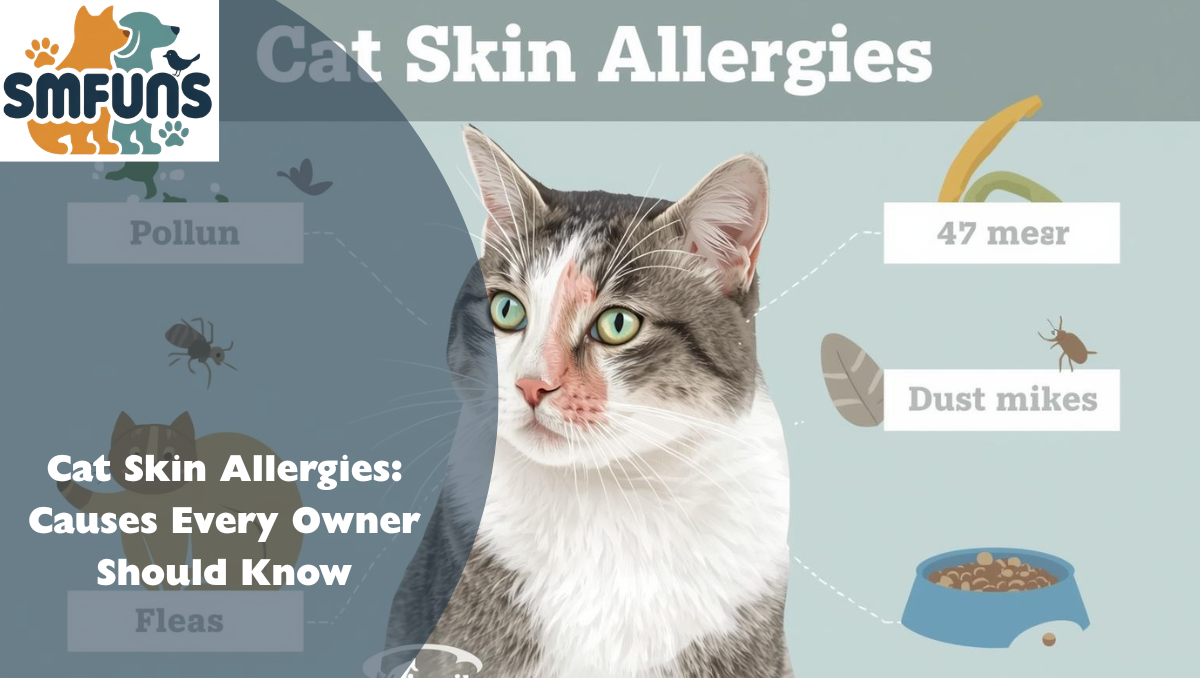
Several different triggers can cause cat skin allergies. In most cases, veterinarians classify allergies into three main categories.
Flea Allergy Dermatitis
Flea allergy dermatitis is one of the most common causes of cat skin allergies.
Some cats react strongly to flea saliva. Even a single flea bite can trigger intense itching for days.
The ASPCA explains that flea allergies often lead to scratching around the neck, base of the tail, and back (http://www.aspca.org).
Flea control is therefore essential for preventing allergic flare-ups.
Food Allergies in Cats
Food allergies occur when a cat’s immune system reacts to certain ingredients.
Common food allergens include:
Chicken
Beef
Fish
Dairy
Eggs
Food allergies often cause both digestive issues and skin irritation.
Cats with food-related cat skin allergies frequently scratch their ears, neck, and face.
Veterinary nutrition research indicates that elimination diets are often necessary to identify food allergens.
Environmental Allergies
Environmental allergens are another major cause of cat skin allergies.
These allergens include pollen, dust mites, mold spores, and household chemicals.
Environmental allergies are also known as feline atopic dermatitis.
The Centers for Disease Control and Prevention explains that environmental allergens commonly affect pets living indoors and outdoors (http://www.cdc.gov).
These allergies often appear seasonally when pollen levels rise.
Breeds More Prone to Cat Skin Allergies
Although any cat can develop allergies, some breeds appear more sensitive to allergens.
Breeds commonly affected by cat skin allergies include:
Siamese
Persian
Bengal
Maine Coon
Sphynx
Genetic predisposition plays an important role in the development of allergies.
Research from veterinary dermatologists suggests that inherited immune responses influence allergic reactions in cats.
Owners of these breeds should monitor skin health carefully.
Why Grooming Is Important for Cats With Allergies
Grooming plays a critical role in controlling cat skin allergies.
Allergens such as pollen and dust easily attach to a cat’s fur. These particles remain trapped against the skin until removed.
Regular grooming removes these irritants before they trigger inflammation.
Gentle brushing helps eliminate loose fur and debris from the coat.
Occasional bathing with mild grooming products can also help cats suffering from allergies.
The American Kennel Club notes that proper coat care significantly improves skin health in companion animals (http://www.akc.org).
Using gentle grooming tools and skin-friendly hygiene products helps prevent irritation.
Many cat owners use trusted grooming supplies to maintain proper coat hygiene and reduce allergen buildup.
SMFuns offers grooming products designed to support healthy skin and comfortable coats for cats prone to allergies.
Environmental Factors That Worsen Allergies
Environmental conditions often worsen cat skin allergies.
Indoor air pollution, dust accumulation, and mold exposure can trigger skin irritation.
Cats also bring outdoor allergens into the home on their fur.
Simple environmental improvements can reduce allergy symptoms.
Regular floor cleaning removes dust mites and pollen.
Washing cat bedding weekly prevents allergen buildup.
Using air purifiers can also reduce airborne particles.
These changes often dramatically improve skin health.
Preventing Cat Skin Allergies Through Hygiene
While some allergies cannot be prevented completely, proper hygiene significantly reduces the severity of cat skin allergies.
Consistent care routines help maintain healthy skin.
Regular brushing removes allergens from the coat.
Clean grooming tools prevent bacterial contamination.
Maintaining a balanced diet supports skin health and immune function.
Veterinary professionals emphasize that skin hygiene and nutrition work together to prevent allergic reactions.
Pet owners who maintain proper grooming routines often see fewer allergy flare-ups.
High-quality grooming products designed for sensitive skin also help protect the skin barrier.
When to See a Veterinarian
Some cases of cat skin allergies require professional medical care.
Pet owners should contact a veterinarian if they notice:
Persistent itching lasting several days
Severe hair loss
Open wounds or bleeding skin
Frequent infections
Behavior changes caused by itching
Veterinarians may perform diagnostic tests to identify the exact allergen.
These tests may include skin tests, blood tests, or elimination diets.
Early diagnosis helps prevent long-term complications.
Managing Cat Skin Allergies Long Term
Although allergies often persist throughout a cat’s life, proper care allows cats to live comfortably.
Long-term management of cat skin allergies focuses on reducing allergen exposure and maintaining healthy skin.
Veterinary treatment plans may include medications, dietary adjustments, and environmental changes.
However, grooming and hygiene remain essential parts of daily allergy management.
Maintaining clean skin reduces irritation and prevents infections.
Consistent care routines make a major difference in your cat’s comfort.
Conclusion
Cat skin allergies are a common but manageable health issue for many cats in the United States. Understanding the causes behind allergic reactions helps pet owners recognize symptoms early and take action before the problem becomes severe.
Flea bites, food sensitivities, and environmental allergens are the most frequent triggers of cat skin allergies. These reactions often lead to itching, overgrooming, hair loss, and irritated skin.
Fortunately, consistent grooming, clean living environments, balanced nutrition, and proper veterinary care can greatly reduce the risk of allergic flare-ups.
Maintaining healthy skin requires reliable grooming tools and skin-friendly hygiene products. High-quality grooming solutions help remove allergens from the coat while protecting sensitive skin.
At SMFuns, we focus on providing trusted grooming products that help pet owners maintain healthy coats and comfortable skin for their cats.
Explore professional grooming solutions at
https://smfuns.com/
For assistance in choosing the right pet care products, contact us at
+19144085788
FAQs
The most common causes include flea bites, food sensitivities, and environmental allergens such as pollen, dust mites, and mold.
Signs include excessive scratching, overgrooming, hair loss, skin redness, and small scabs across the body.
Yes. Regular grooming removes allergens from the coat and helps maintain healthy skin
Most allergies cannot be completely cured. However, they can be successfully managed through grooming, dietary changes, and veterinary care.
Gentle grooming tools and skin-friendly hygiene products designed for sensitive skin help remove allergens and protect the skin barrier.