

Introduction
Puppies are soft, playful, and full of energy. However, their skin is delicate and still developing. Many USA pet owners focus on feeding and training, but overlook daily skin care. That mistake often leads to itching, dryness, and irritation. A proper puppy skin care routine protects fragile skin, supports coat growth, and prevents long-term problems.
According to the American Kennel Club, puppy skin is thinner and more sensitive than adult dog skin, which makes gentle grooming essential (http://www.akc.org). With the right steps and products, you can keep your puppy comfortable and healthy from the start.
Why a puppy skin care routine Is Essential in the First Year
Puppies are exposed to new environments every day. They roll on floors, carpets, grass, and dirt. Their skin comes in contact with dust, allergens, and bacteria.
The ASPCA explains how young pets are more sensitive to environmental irritants here: http://www.aspca.org. Without a consistent puppy skin care routine, these irritants can lead to itching, rashes, and infections.
Early skin care also helps your puppy get used to grooming, which makes lifelong care easier.
Understanding Puppy Skin vs Adult Dog Skin
Puppy skin has less oil production. It loses moisture faster. It is more prone to dryness and irritation.
VCA Animal Hospitals describes how delicate young pet skin can be and why gentle grooming matters (http://www.vcahospitals.com).
This is why a puppy skin care routine must include mild cleansing, proper brushing, and limited bathing.
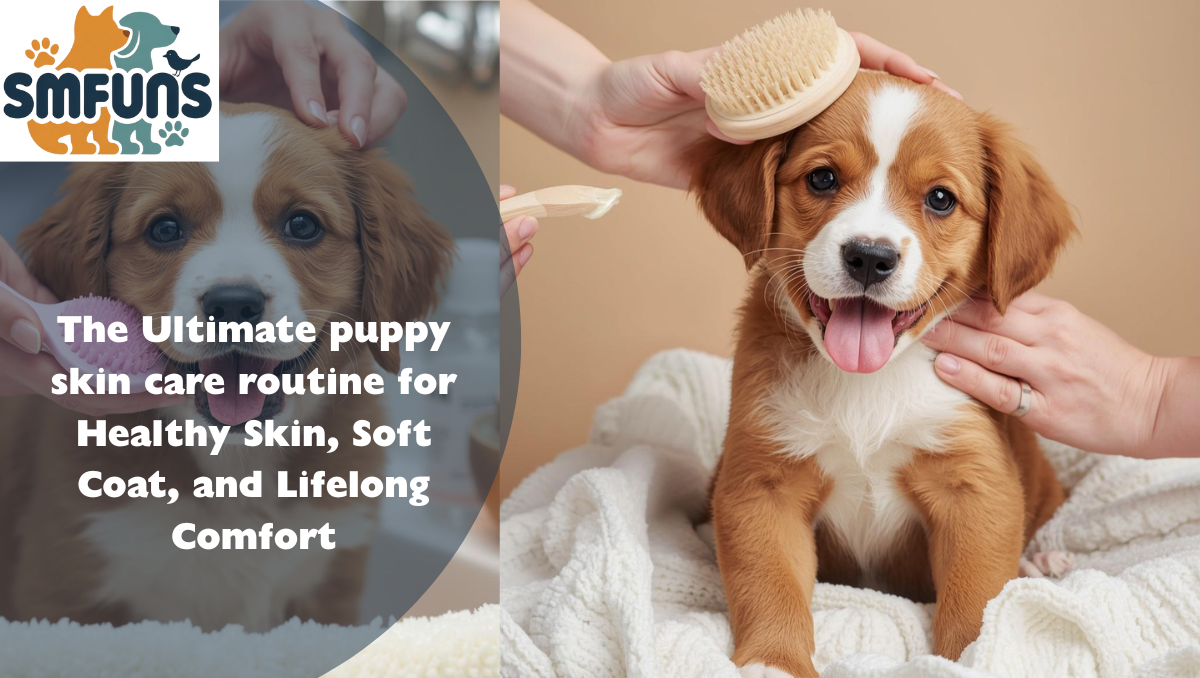
Daily Step in a puppy skin care routine: Gentle Brushing
Brushing is not only for detangling. It removes dirt, spreads natural oils, and improves circulation.
Even short-haired puppies benefit from daily brushing. Use a soft brush designed for puppies. This prevents skin scratches.
PetMD highlights how brushing supports skin and coat health here: http://www.petmd.com.
Weekly Step: Proper Bathing With Puppy Shampoo for Sensitive Skin
Puppies should not be bathed frequently. Once every three to four weeks is enough unless they get dirty.
Use a tear-free puppy shampoo made specifically for young dogs. Human shampoo and adult dog shampoo can harm delicate skin. The American Veterinary Medical Association warns against using human grooming products on pets (http://www.avma.org).
A key part of a puppy’s skin care routine is choosing mild products that cleanse without removing moisture.
Ingredients That Support a Healthy Puppy Skin Care Routine
Look for oatmeal, aloe vera, chamomile, and coconut-based cleansers. These ingredients soothe the skin and reduce irritation.
Cornell University’s veterinary experts explain how soothing ingredients benefit pet skin here: http://www.vet.cornell.edu.
Avoid sulfates, alcohol, parabens, artificial dyes, and strong fragrances.
Cleaning Paws and Belly Between Baths
Puppies explore the world with their paws. Dirt and bacteria collect quickly.
Instead of frequent baths, wipe paws and belly with a damp cloth. This keeps your puppy clean without drying the skin.
The CDC shares hygiene tips for pets that also apply to puppies (http://www.cdc.gov).
This small habit is an important part of a puppy’s skin care routine.
Checking the Skin Regularly for Early Signs of Problems
Skin issues often start small. Look for redness, flakes, bumps, or constant scratching.
AKC health advice explains that early detection prevents more serious skin problems (http://www.akc.org/expert-advice/health).
By checking your puppy’s skin weekly, you can address issues before they become serious.
Keeping the Coat Dry and Clean
Moisture trapped in the coat can lead to fungal growth and irritation.
After outdoor play or rain, dry your puppy with a soft towel. This prevents skin infections.
VCA also explains how moisture affects pet skin health here: http://www.vcahospitals.com/know-your-pet.
The Role of Diet in a Puppy Skin Care Routine
Healthy skin starts from the inside. A balanced puppy diet rich in omega fatty acids supports skin hydration and coat shine.
PetMD discusses how nutrition impacts skin and coat condition here: http://www.petmd.com/dog/nutrition.
A good diet naturally reduces dryness and itching.
Creating a Calm Grooming Environment
Puppies remember early experiences. If grooming feels stressful, they resist it later.
Use calm movements, soft towels, and gentle tools. Reward your puppy after grooming.
This makes your puppy’s skin care routine something they enjoy rather than fear.
How Quality Grooming Tools Make a Difference
Using soft brushes, gentle towels, and puppy-safe shampoos makes the process easier and safer.
High-quality grooming supplies, such as those available at SMFuns, support every step of a proper puppy skin care routine without irritating the skin.
Common Mistakes That Damage Puppy Skin
Over-bathing is the most common mistake. It strips natural oils.
Using strong fragrances is another issue. Puppies are sensitive to smells.
Ignoring small signs, such as scratching or licking, can also lead to bigger problems.
Long-Term Benefits of Following a Puppy Skin Care Routine
Puppies raised with proper skin care grow into dogs with healthy coats and fewer allergies.
Early habits reduce the risk of chronic itching and infections.
Following this routine ensures comfort and cleanliness for years to come.
Conclusion
A consistent puppy skin care routine protects delicate skin, prevents irritation, and supports healthy coat growth. Gentle brushing, limited bathing, proper ingredients, and regular checks make a big difference. When combined with reliable grooming products from SMFuns, this routine becomes simple and effective. Start early, stay consistent, and your puppy will enjoy lifelong skin comfort.
FAQs
Once every three to four weeks, unless your puppy gets very dirty.
No. Baby shampoo is made for human skin and can irritate puppies.
Redness, scratching, flaky skin, and excessive licking.
Yes. Brushing spreads natural oils and removes dirt.
Oatmeal, aloe vera, chamomile, and mild coconut cleansers.