

Introduction
If you’ve ever cuddled your feline friend and noticed a smell that rivals last week’s leftovers, you’re not alone. Cat parents across the USA often ask what’s behind smelly feline breath and what they can do about it. Understanding the reasons for a cat’s bad breath is essential—not just to keep your home smelling fresh, but also to protect your cat’s overall health. Bad breath in cats, medically known as halitosis, is never normal and usually signals an underlying issue that warrants veterinary attention and a thoughtful approach to dental hygiene. According to PetMD, bad breath often comes from dental disease and bacterial buildup. http://www.petmd.com/cat/conditions/mouth/bad-breath-cats
What Is Bad Breath in Cats?
Bad breath, or halitosis, in cats can range from slightly unpleasant to outright offensive, but it deserves attention regardless of intensity. Veterinary experts at the Cornell Feline Health Center note that foul breath can be one of the first signs of oral or systemic issues, including periodontal disease. http://www.vet.cornell.edu/departments-centers-and-institutes/cornell-feline-health-center/health-information/feline-health-topics/bad-breath-sign-illness
Top Cat Bad Breath Reasons Explained
Understanding the most common causes of bad breath helps you tackle the problem at its source. Below are the top reasons your cat may be suffering from persistent halitosis.
Dental Disease: The Most Common Cause
Dental disease is the number one culprit behind bad breath in cats. Plaque and bacteria accumulate along the gumline, leading to gingivitis and periodontal disease—painful conditions that emit foul odors. This progression is described in detail by the American Veterinary Medical Association (AVMA). https://www.avma.org/resources-tools/pet-owners/petcare/canine-and-feline-dental-health
With consistent dental care—including daily brushing and the right tooth care products—you can dramatically reduce bacterial buildup. At SMFuns, we recommend high‑quality pet dental kits and cat‑safe toothbrushes designed for feline oral hygiene to keep plaque at bay.
Poor Oral Hygiene and Lack of Brushing
Unlike humans, cats don’t brush their own teeth. Without regular oral care, food particles and bacteria can form plaque, leading to gum inflammation and bad breath. The Cornell Feline Health Center emphasizes that regular brushing is key. http://www.vet.cornell .edu/departments-centers-and-institutes/cornell-feline-health-center/health-information/feline-health-topics/dental-care-basics
Using a gentle toothbrush and cat‑safe toothpaste from SMFuns can make a world of difference in your pet’s oral health, freshening breath, and protecting gums and teeth.
Diet and Food Particles
What your cat eats plays a significant role in their breath. Certain diets—especially soft or wet foods—can stick to teeth, creating an ideal breeding ground for bacteria. In some cases, food debris can become trapped between teeth and gums, decompose, and create foul odors. The experts at Purina explain how diet impacts oral health and breath. https://www.purina.com/articles/cat/health/dental/bad-breath-in-cats
Providing high‑quality food formulated for dental support, along with regular dental treats or cat dental chews, can help reduce residual food particles and keep breath fresher between cleanings.
Systemic Health Issues
Bad breath isn’t always a dental problem. It can also indicate serious health concerns:
Kidney Disease: If your cat’s kidneys aren’t filtering waste properly, toxins accumulate and can emit a strong ammonia‑like smell from the mouth. The Pet Poison Helpline notes that kidney issues often change breath odor. https://www.petpoisonhelpline.com/blog/5-reasons-your-cats-breath-smells-bad
Diabetes: A fruity or sweet breath odor can be a sign of diabetes, a common endocrine disorder in cats. The veterinary team at VCA Hospitals describes how metabolic disorders affect breath. https://vcahospitals.com /know-your-pet/bad-breath-in-cats
Liver Disease: Foul or rotten odors may indicate liver dysfunction, a condition also covered by veterinary sources such as PetMD. http://www.petmd.com /cat/conditions/liver/bad-breath-symptom
These conditions require veterinary diagnosis and treatment, and bad breath often accompanies other symptoms like appetite changes, weight loss, or lethargy.
Foreign Objects and Oral Injuries
Cats are curious creatures, and sometimes bits of food, hair, string, or other foreign materials get stuck in their mouths. These items can rot, leading to infections and foul odors. Infections, mouth ulcers, and oral injuries also contribute to unpleasant feline breath. The Cornell Feline Health Center explains how foreign bodies and injuries affect oral health. http://www.vet.cornell.edu /departments-centers-and-institutes/cornell-feline-health-center/health-information/feline-health-topics/mouth-injuries
How to Prevent Bad Breath in Cats
Prevention is always better than treatment when it comes to the causes of a cat’s bad breath. Here are proven strategies to keep your cat’s breath smelling fresh and their mouth healthy.
Daily Dental Care
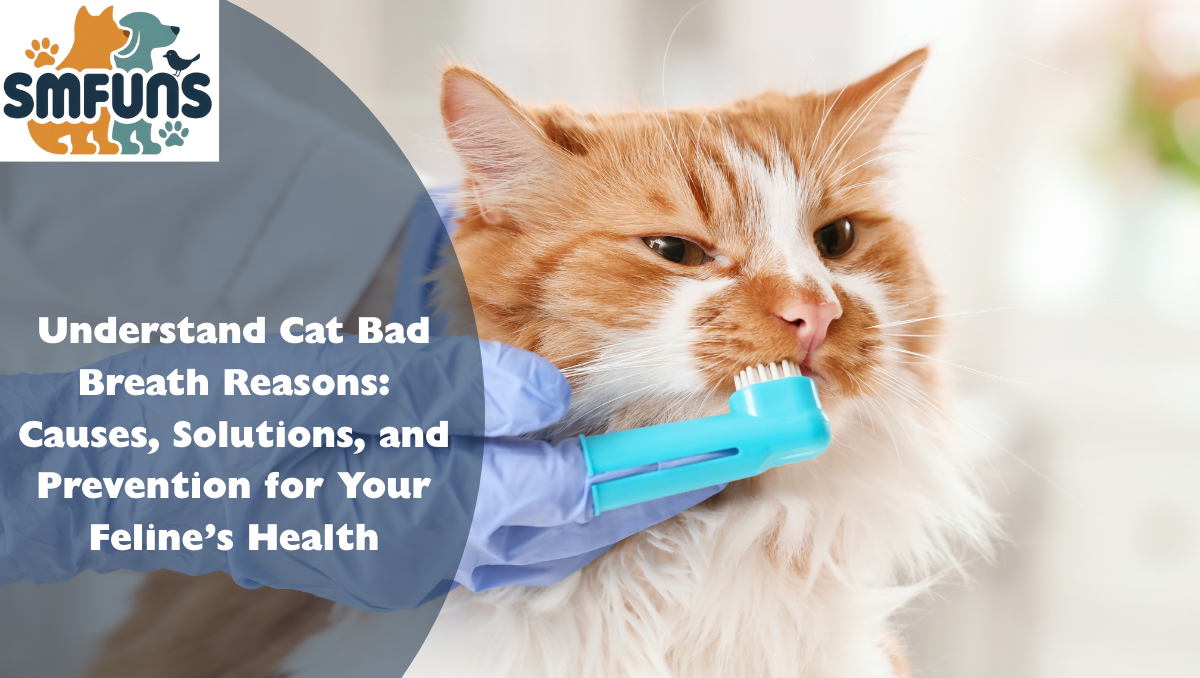
Daily brushing is the gold standard of prevention. Use a pet‑safe toothbrush and cat toothpaste to remove plaque before it hardens. At SMFuns, we carry dental care kits and enzymatic cleaning gels that make brushing easier and more effective.
The American Society for the Prevention of Cruelty to Animals (ASPCA) offers excellent tips on building a dental care routine at home. https://www.aspca.org/pet-care/cat-care/cat-dental-care
Professional Veterinary Cleanings
Regular vet check‑ups, including professional dental cleanings, play a crucial role in preventing advanced periodontal disease. A veterinarian can remove tartar buildup under the gums where at‑home brushing might not reach, as noted by the Cornell Feline Health Center. http://www.vet.cornell .edu/departments-centers-and-institutes/cornell-feline-health-center/health-information/feline-health-topics/professional-dental-cleanings
Dental Treats and Tooth Care Chews
Veterinary Oral Health Council (VOHC)‑approved dental treats and chews help reduce plaque and freshen breath between brushings. These treats are a great supplement to brushing and offer your cat an enjoyable way to support oral health.
Routine Health Screenings
Because systemic diseases like kidney or liver disease can cause bad breath, keeping up with routine veterinary wellness exams helps catch potential issues early. If you notice persistent bad breath paired with other symptoms, don’t hesitate to consult your vet.
Cat Bad Breath Reasons and Diet
Your cat’s diet affects both their overall health and oral hygiene. Poor-quality foods with fillers, strong smells, or high moisture content can contribute to bad breath. Although dry food isn’t a cure‑all, high‑quality kibble that supports dental health can help reduce plaque buildup. Always pair diet adjustments with regular brushing for the best results.
When to See a Vet for Bad Breath
It’s time to contact your veterinarian if your cat’s breath remains foul despite good oral care routines or if bad breath is accompanied by symptoms such as drooling, bleeding gums, reduced appetite, or behavioral changes. Serious health conditions can lurk behind persistent halitosis, and early veterinary intervention is key.
Conclusion
Understanding the causes of a cat’s bad breath empowers you to take action before minor problems become major ones. While occasional mild odors may be normal, consistent bad breath often signals dental disease, food residue buildup, or underlying health concerns. With daily dental care, regular veterinary visits, and the right grooming and oral hygiene products from SMFuns, you can help protect your cat’s health, boost their comfort, and keep their breath fresh.
Whether you’re choosing a quality cat toothbrush, enzymatic toothpaste, or yummy dental treats, SMFuns has the products you need to support your feline’s oral hygiene and overall well‑being. Visit https://smfuns.com/ or call +19144085788 to learn more about keeping your cat healthy and happy.
Call To Action:
For top‑quality pet grooming and dental care products designed to tackle cat bad breath reasons and promote lifelong oral health, explore https://smfuns.com/ or call us at +19144085788. Your cat deserves a healthy smile!
FAQs
Persistent bad breath can result from dental disease, food particles trapped between teeth, systemic health issues such as kidney disease or diabetes, or foreign objects in the mouth.
Yes. Foods that stick to teeth or are of low quality can contribute to bacterial buildup and foul breath. A balanced diet and dental treats can help.
Daily brushing is ideal, but even a few times a week can help prevent plaque buildup if paired with dental chews and routine veterinary care.
If bad breath persists or is accompanied by other symptoms such as weight loss or appetite changes, it may indicate an underlying health issue and warrant veterinary evaluation.
Pet‑safe toothbrushes, cat‑specific toothpaste, dental chews, and oral hygiene rinses can all help reduce plaque and freshen breath when used regularly as part of your cat’s grooming routine.