


How to Clean Dog Teeth Properly
Introduction
Many dog owners in the United States pay close attention to grooming, nutrition, and exercise. However, dental care often receives far less attention, which can create serious health problems over time. Learning how to clean dog teeth correctly is one of the most important steps toward protecting your dog’s long-term health.
Dental disease affects a large percentage of dogs, and plaque and bacteria can build up quickly in a dog’s mouth. As a result, without proper cleaning, this buildup can lead to tartar, gum infections, and painful tooth decay. According to veterinary experts, untreated dental disease can even affect the heart, liver, and kidneys.
Fortunately, understanding how to clean dog teeth properly makes prevention simple and manageable. With the right routine, proper tools, and veterinarian-recommended techniques, dog owners can maintain healthy teeth and fresh breath at home.
In this guide, you will learn exactly how to clean dog teeth, why dental hygiene matters, and how professional grooming tools from SMFuns can help you maintain a simple and effective dog dental care routine.
Why Dog Dental Care Is Essential for Health
Dental hygiene is not just about fresh breath. In reality, it plays a major role in your dog’s overall health.
Dogs naturally accumulate plaque from food particles and bacteria. Over time, this plaque hardens into tartar, which irritates the gums and eventually leads to periodontal disease.
The American Veterinary Medical Association explains that periodontal disease is the most common clinical condition in adult dogs.
http://www.avma.org/resources-tools/pet-owners/petcare/pet-dental-care
Once the disease begins, bacteria may spread into the bloodstream. Consequently, this can affect vital organs and shorten a dog’s lifespan.
Veterinary professionals also explain that dogs often hide pain very well. Because of this, many owners do not notice dental disease until the condition becomes severe.
Learning to clean a dog’s teeth early helps prevent plaque buildup and keeps gums healthy. Additionally, regular brushing and proper dental hygiene significantly reduce the risk of infections and tooth loss.
Signs Your Dog Needs Dental Cleaning
Many dog owners do not realize when dental care becomes necessary. Therefore, recognizing the early warning signs allows you to act quickly.
Bad breath is often the first indicator of plaque buildup. In many cases, a persistent odor signals bacterial growth inside the mouth.
Red or swollen gums can also suggest gum disease. Meanwhile, visible tartar along the gumline may indicate that plaque has hardened.
PetMD notes that additional symptoms may include difficulty eating, drooling, and visible tartar on teeth.
http://www.petmd.com/dog/general-health/dog-dental-care
Some dogs may chew more slowly or avoid hard food when their teeth become painful. Because of this, behavioral changes can sometimes signal dental discomfort.
Recognizing these symptoms early encourages dog owners to learn how to clean their dog’s teeth properly before the problem becomes serious. Regular brushing, therefore, helps prevent these warning signs from developing.
Understanding Plaque and Tartar in Dogs
Before learning how to clean dog teeth, it helps to understand how plaque forms.
Plaque develops when bacteria mix with saliva and food debris. As a result, this sticky layer attaches to the surface of the teeth.
If plaque remains for several days, it eventually hardens into tartar. At this stage, simple brushing may no longer remove the buildup.
The American Kennel Club explains that daily brushing helps prevent plaque from turning into tartar.
http://www.akc.org/expert-advice/health/dog-dental-care
Once tartar accumulates below the gumline, infections may develop and damage surrounding tissue.
For this reason, early dental hygiene is critical to long-term oral health. The sooner dog owners learn how to clean dog teeth, the easier it becomes to prevent serious dental disease.
Tools You Need for Cleaning Dog Teeth
Using the correct tools makes a significant difference when learning to clean a dog’s teeth.
Human dental products should never be used on dogs because many human toothpastes contain ingredients toxic to pets. Instead, dog-specific dental products provide safe and effective cleaning.
Dog Toothbrushes
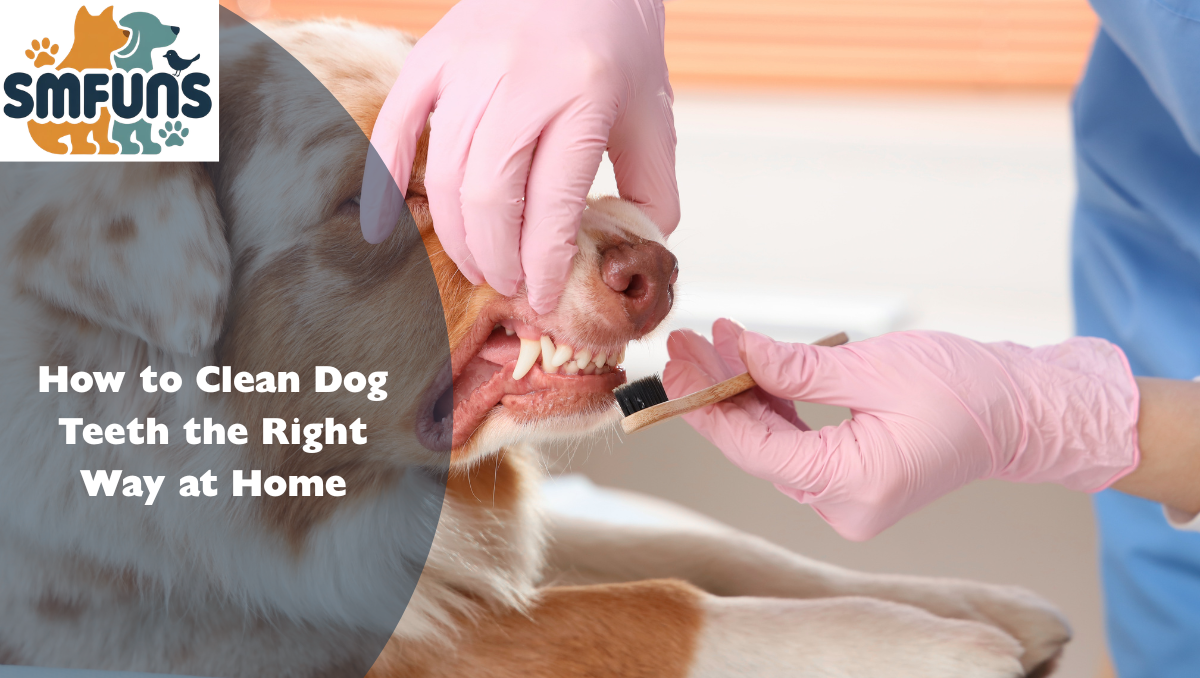
A soft-bristled dog toothbrush can reach both large and small teeth without damaging the gums. Alternatively, finger toothbrushes are useful for dogs that feel nervous during brushing.
Veterinary dental experts at VCA Animal Hospitals recommend soft brushes designed specifically for pets.
http://www.vcahospitals.com/know-your-pet/brushing-teeth-in-dogs
High-quality dog toothbrushes allow owners tto clean their dogs’ teeth while effectively removing plaque gently
Dog Toothpaste
Dog toothpaste uses pet-safe ingredients and often includes flavors that dogs enjoy, such as poultry or beef. Because of these flavors, dogs are more likely to accept brushing.
Dental Wipes and Chews
Dental wipes help remove bacteria from the tooth surface when brushing is not possible. Similarly, dental chews support oral hygiene by encouraging chewing activity.
Many professional grooming and dental hygiene products designed for dog oral care are available through SMFuns. These tools make it easier for owners to maintain consistent dental routines at home.
Step-by-Step Guide on How to Clean Dog Teeth
Learning how to clean a dog’s teeth becomes easier when the process is broken down into simple steps.
Step 1: Introduce the Toothpaste
First, let your dog smell and taste the toothpaste. This step helps create a positive association with the brushing process.
Never force brushing on the first attempt; patience builds trust.
Step 2: Position Your Dog Comfortably
Next, choose a calm environment and sit beside your dog rather than directly in front of it. This position reduces anxiety and helps your dog stay relaxed.
Step 3: Lift the Lips Gently
After that, raise your dog’s lips to expose the teeth and gums.
Focus primarily on the outer surfaces of the teeth, as dogs naturally clean the inner surfaces with their tongues.
Step 4: Brush in Circular Motions
Use gentle circular strokes while brushing. Pay special attention to the gumline, where plaque tends to accumulate most.
According to ASPCA dental care guidance, brushing for about two minutes provides effective cleaning.
http://www.aspca.org/pet-care/dog-care/dog-dental-care
Step 5: Reward Your Dog
Finally, reward your dog with praise or a healthy treat after brushing. Positive reinforcement encourages cooperation during future brushing sessions.
With consistency, learning how to clean dog teeth becomes a simple part of regular grooming routines.
How Often Should You Brush Your Dog’s Teeth?
Frequency plays a major role in successful dental care.
Veterinary professionals recommend brushing a dog’s teeth daily whenever possible. However, brushing at least three times per week can still provide strong protection against plaque buildup.
Cornell University veterinary experts explain that consistent brushing dramatically reduces the risk of periodontal disease.
http://www.vet.cornell.edu/departments-centers-and-institutes/cornell-feline-health-center
Dogs that receive frequent dental care often avoid expensive professional dental procedures. Therefore, developing a routine ensures that learning how to clean dog teeth becomes a long-term habit rather than an occasional task.
Diet and Nutrition for Healthy Dog Teeth
Dental health also depends on proper nutrition.
Certain foods contribute to plaque buildup, while others help support oral health. For example, dry kibble can help scrape plaque from teeth more effectively than soft food.
However, food alone cannot replace brushing.
The Centers for Disease Control and Prevention explains that bacteria from the mouth can spread through the bloodstream if dental disease develops.
http://www.cdc.gov/healthypets/pets/dogs.html
Because of this, maintaining both proper nutrition and dental hygiene is essential.
Combining a balanced diet with regular brushing strengthens the effectiveness of dog tooth-cleaning routines.
Professional Veterinary Dental Cleaning
Even with proper brushing, some dogs still require professional dental cleaning.
Veterinary dentists perform deep cleaning procedures under anesthesia. During these procedures, veterinarians remove tartar beneath the gumline that brushing cannot reach.
The American Animal Hospital Association emphasizes that professional dental exams help detect oral disease early.
http://www.aaha.org/your-pet/pet-owner-education/ask-aaha/dental-care
Routine veterinary dental exams, therefore, complement at-home care. Together, these approaches create the most reliable strategy for maintaining long-term oral health.
Building a Simple Dog Dental Care Routine
Creating a routine makes learning how to clean a dog’s teeth much easier.
Consistency matters more than perfection. In fact, many experienced dog owners combine several approaches,hes including brushing, dental chews, oral rinses, and professional cleanings.
High-quality dental hygiene tools can also make these routines easier to maintain.
Professional grooming and oral hygiene products available at SMFuns help dog owners maintain effective dental care without complicated procedures. With the right tools and habits, protecting your dog’s teeth becomes simple and stress-free.
Conclusion
Dental care is one of the most overlooked aspects of dog health, yet it plays a crucial role in preventing disease and improving quality of life.
Understanding how to clean a dog’s teeth allows dog owners to prevent plaque buildup, gum disease, and painful infections. Regular brushing, balanced nutrition, and veterinary checkups all contribute to strong oral health.
Most importantly, consistency makes the biggest difference.
Using professional grooming and dental hygiene products can simplify the entire process. When the right tools are used, brushing becomes faster, easier, and more comfortable for both dogs and owners.
Explore trusted dog dental care products and grooming tools designed for effective oral hygiene.
Visit
https://smfuns.com/
For assistance or product guidance, call
+19144085788
FAQs
Veterinarians recommend brushing daily. If daily brushing is not possible, brushing at least three times per week still helps prevent plaque buildup.
No. Human toothpaste contains ingredients that dogs should not swallow. Always use toothpaste specifically designed for pets.
Plaque can turn into tartar, leading to gum disease, tooth loss, and infections that may affect major organs.
Dental chews help reduce plaque, but cannot replace brushing. They work best when combined with regular brushing.
Dental care should begin during puppyhood. Early training helps dogs accept brushing and maintain healthy teeth throughout life.