

Introduction
If your cat has unsightly tear discoloration under its eyes, you’re likely searching for the best cat tear stain remover that truly works. Tear staining ranges from mild brownish marks to deeper rust‑colored streaks. Many USA pet parents struggle to find a solution that is safe, effective, and gentle enough for daily use. The right remover not only lightens stains but also supports overall eye hygiene. In this detailed guide, we break down the top tear stain products, proven methods to reduce staining, and how to incorporate eye care into your regular grooming routine for long‑term results.
Every cat deserves healthy, bright eyes. Tear stains are usually more than just cosmetic—they can be signs of eye irritation, blocked tear ducts, allergies, or environmental triggers. When you choose the best cat tear stain remover, you’re investing in your cat’s comfort and health. We’ll explore the top options, backed by veterinary insights and real pet owner experiences.
Why Tear Stains Happen: Understanding the Problem
What Are Tear Stains?
Tear stains are discolored patches of fur under a cat’s eyes caused by excess tear flow. Tear fluid contains porphyrins, natural compounds that darken when exposed to air. These compounds can leave brown or reddish marks that are hard to remove without the right products.
Common Causes of Tear Staining
Tear staining can result from several factors:
- Facial anatomy: Some breeds, such as Persians and Himalayans, have flatter faces that can reduce tear drainage efficiency.
- Eye irritation: Allergens, dust, or smoke can trigger excessive tearing. The ASPCA notes that environmental factors often contribute to eye irritation in pets. http://www.aspca.org/pet-care/cat-care/common-cat-behavior-issues
- Blocked tear ducts: When tear ducts don’t drain properly, tears spill over the eyelid and stain fur.
- Infections or inflammation: Conjunctivitis or other eye conditions can increase tearing. The American Veterinary Medical Association highlights the importance of monitoring eye health to catch issues early. https://www.avma.org/resources-tools/pet-owners/petcare/eye-care-your-cat
Understanding why tear stains occur helps you choose the right remover and grooming routine.
How to Choose the Best Cat Tear Stain Remover
Safety Comes First
Your cat’s eyes are delicate. Choose only products formulated for feline use. Human products often contain ingredients that can irritate a cat’s skin and eyes.
Ingredients to Look For
Effective tear stain removers typically include:
- Gentle, saline‑based cleansers
- Hypoallergenic formulas
- Natural soothing agents like chamomile or aloe
Avoid products with alcohol, artificial fragrances, or harsh chemicals.
Ease of Use
Look for clear instructions and easy application. Products that require minimal handling reduce stress for both you and your cat during grooming.
Top Picks: Best Cat Tear Stain Removers
Below are some of the most effective solutions available, ideal for cats with mild to moderate staining.
Hypoallergenic Tear Stain Wipes
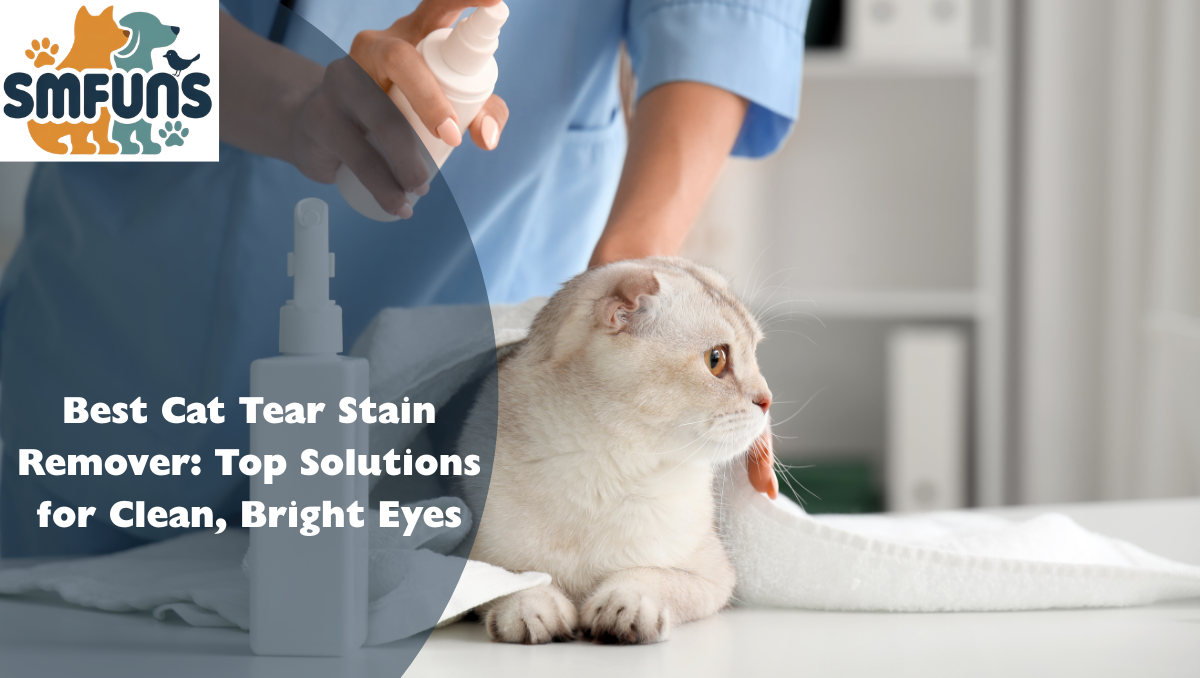
Soft, pet‑safe wipes are ideal for daily maintenance. They help remove tear residue before it oxidizes and deepens in color. When choosing the best cat tear stain remover, wipes with soothing ingredients support gentle cleaning.
At SMFuns, our hypoallergenic eye wipes are designed for sensitive felines. They clean without irritating the skin and help keep tear stains at bay when used consistently.
Liquid Tear Stain Solutions
Liquid removers offer a deeper clean for stubborn stains. These formulas are typically applied with a soft cloth or cotton pad.
To use:
- Saturate a pad with the solution.
- Gently wipe from the inner corner outward.
- Repeat once or twice daily until staining diminishes.
Always follow the product’s instructions and avoid getting any liquid into the eye itself.
Tear Stain Gels and Creams
Gels and creams adhere to fur better than liquids, giving you longer‑lasting results. These work especially well on older stains that don’t easily lift with wipes alone.
When choosing a gel, ensure it’s formulated for cats and doesn’t contain fragrances that could irritate.
Natural and Organic Tear Stain Removers
Some pet owners prefer natural products free of synthetic additives. These tear stain removers often use plant‑based cleansers and calming ingredients.
Natural doesn’t always mean mild, so choose products tested for feline safety.
Step‑by‑Step Guide: Using Tear Stain Removers Safely
Step 1: Assess Your Cat’s Eyes
Before applying any remover, check for swelling, redness, or yellow or green discharge. These symptoms may indicate infection. If present, consult a veterinarian first. The VCA Animal Hospitals recommends veterinary assessment when eye discharge changes in color or consistency. https://vcahospitals.com/know-your-pet/eye-disorders
Gather Your Tools
You’ll need:
- A high‑quality tear stain remover (wipes or liquid)
- Soft cotton pads or cloth
- Optional: pet eye brush for delicate grooming
At SMFuns, we offer grooming kits that include gentle wipes and soft brushes to make this process stress‑free.
Gently Clean the Area
Always clean the fur outside the tear line to avoid stressing the tear ducts. Hold your cat gently and talk soothingly to keep them calm.
Repeat Daily
Consistent care prevents build‑up. Daily use for a few weeks typically shows noticeable improvement.
Grooming Tips to Prevent Tear Stains
Keep Fur Trimmed Around the Eyes
Excess fur traps moisture and increases staining. Use pet-specific grooming scissors or seek professional grooming assistance.
Brush Regularly
Regular brushing removes loose hairs and prevents irritation around the face. A soft brush helps reduce tear contact with fur.
Maintain Eye Hygiene
Clean the area around the eyes as part of your regular grooming routine. The AKC emphasizes that eye care should be part of your pet’s weekly grooming habits. https://www.akc.org/expert-advice/health/common-eye-conditions-in-cats
Reduce Irritants at Home
Allergens like dust, pollen, and smoke can trigger tearing. Keeping your home clean and smoke‑free helps reduce eye irritation.
Vet‑Approved Practices for Tear Stain Control
Regular Eye Exams
Even if the staining is mild, routine veterinary check‑ups can catch early signs of infection or tear duct issues. The Cornell Feline Health Center advises that chronic tear staining deserves professional evaluation. http://www.vet.cornell.edu/departments-centers-and-institutes/cornell-feline-health-center
Rule Out Underlying Health Problems
If a remover doesn’t help after consistent use, a vet can test for:
- Blocked tear ducts
- Conjunctivitis
- Allergies
- Anatomical issues
Addressing the root cause offers longer‑term relief.
Professional Grooming Assistance
Some cats resist home grooming. Professional groomers are trained to work in sensitive areas, such as the eyes, and can trim fur to minimize tearing.
Comparing Tear Stain Remover Types
Wipes vs. Liquid Cleaners
- Wipes are best for daily maintenance
- Liquid cleaners are ideal for deeper cleaning
Both can be effective when paired with proper technique.
Gels vs. Natural Solutions
- Gels offer longer contact time
- Natural solutions appeal to pet parents who prefer plant‑based products
The most important factor is choosing a product that’s safe for cats.
What to Avoid in Tear Stain Products
Harmful Ingredients
- Alcohol
- Synthetic fragrances
- Harsh detergents
These can irritate the eye area and worsen tear staining.
Human Products
Human eye cleaners and makeup removers are not formulated for cats. They can cause burning, tearing, or allergic reactions.
Always choose products labeled safe for feline use.
Signs You Need Veterinary Help
Even with the best cat tear stain remover, some situations warrant professional care. Contact a vet if your cat shows:
- Thick yellow or green discharge
- Frequent pawing at the eyes
- Excessive tearing with redness
- Vision changes
Prompt veterinary care prevents serious complications.
Diet and Lifestyle Factors That Affect Tear Stains
Hydration
Dehydration can worsen tear staining. Ensure fresh water is always available.
Nutrition
A balanced diet supports skin and fur health. Some diets high in fillers may contribute to tear issues.
Discuss diet options with your veterinarian to support overall eye health.
Stress and Tear Production
Stress can contribute to eye tearing. Cats do best with calm routines and quiet, safe spaces.
Conclusion
Choosing the best cat tear stain remover means selecting a product that is safe, gentle, and formulated specifically for feline eye care. Daily grooming, regular eye-cleaning routines, and the right tear-stain solution can transform stained fur into clean, healthy skin. Consistency is key, and pairing high‑quality products with proper technique makes the process easy and effective.
SMFuns offers a curated selection of tear-stain removers, gentle wipes, and grooming tools specifically designed for cats. Our products support daily eye care routines and help keep tear discoloration under control. For long‑lasting results and healthier, brighter eyes, choose products made for cats and recommended by pet care professionals.
Ready to transform your cat’s eye care routine? Visit https://smfuns.com/ or call +19144085788 for expert recommendations and premium grooming products tailored to your feline’s needs.
Call To Action:
Discover the best cat tear stain remover solutions at SMFuns — https://smfuns.com/ | +19144085788
FAQs
Daily-use tear-stain wipes designed for cats are often the most convenient and effective. Choose hypoallergenic wipes with soothing ingredients that clean without irritation.
Yes. While many tear stains are cosmetic, persistent staining with redness or colored discharge may indicate an infection or a blocked tear duct. See a vet if symptoms worsen.
Start with once daily and adjust based on results. Daily cleaning prevents build‑up and keeps fur clean.
Natural products can work well if they are formulated for cats and free of harsh chemicals. Always test on a small area first and watch for sensitivity.
A balanced diet and proper hydration support overall eye health. Talk to your veterinarian about diets that may reduce irritation or stress that contributes to tearing.