

Introduction
If you’ve noticed reddish-brown streaks beneath your cat’s eyes, you’re not alone. Many USA pet parents struggle with unsightly cat tear stains and wonder why they appear and how to stop them. These marks can be concerning, but before panicking, it’s important to understand what they mean, what causes them, and how to care for your cat’s delicate eye area. This guide dives deep into the reasons behind cat tear stains, simple ways to treat them, and how proper grooming can help prevent them in the first place.
Healthy eyes are essential to your cat’s overall well‑being. When tears overflow and leave stains, it can lead to discomfort and bacterial buildup. With the right information and practical grooming strategies, you can help keep your feline’s eyes clear, comfortable, and bright.
What Are Cat Tear Stains?
Understanding the Basics
Cat tear stains are discolorations around a cat’s eyes caused by tears that overflow onto the fur. These marks typically appear reddish‑brown because porphyrins in tears react with oxygen. Unlike humans, cats don’t sweat, but their tear composition can sometimes cause staining when tears spill onto surrounding fur.
In many cases, tear stains are a cosmetic issue. However, persistent or heavy staining could indicate an underlying health concern. According to the American Society for the Prevention of Cruelty to Animals (ASPCA), tear staining can be linked with infections, allergies, or eye irritation if left unaddressed. http://www.aspca.org/pet-care/cat-care/common-cat-behavior-issues
What Causes Cat Tear Stains?
Anatomy of a Cat’s Tear System
Cats have tear ducts that drain tears from the eyes into the nasal cavity. If tear drainage is inefficient, tears spill over and stain the fur beneath the eyes. This is more common in certain breeds and individual cats with shallow tear ducts.
Breed Predispositions
Some cats are predisposed to tear staining due to facial structure, especially breeds with shorter faces like Persians and Himalayans. These cats often have shallow tear ducts and closer tear-to-fur contact, which can encourage staining.
Eye Infections and Medical Conditions
Eye infections, conjunctivitis, blocked tear ducts, or entropion (where eyelashes rub against the eye) can result in irritation and excessive tearing. The Cornell Feline Health Center notes that a veterinarian should evaluate chronic tearing to rule out underlying issues. http://www.vet.cornell.edu/departments-centers-and-institutes/cornell-feline-health-center
If the tear staining is accompanied by discharge that is yellow or green, or your cat squints or paws at their eyes, seek veterinary care promptly.
Allergies and Environmental Irritants
Dust, pollen, smoke, or strong fragrances can irritate a cat’s eyes and lead to excessive tearing. The American Veterinary Medical Association emphasizes that environmental factors often contribute to ocular discomfort. https://www.avma.org/resources-tools/pet-owners/petcare/eye-care-your-cat
Diet and Nutrition
Water quality and diet can influence tear production and stain severity. Some cats develop staining from irritants in their food or from dehydration. Ensuring a high‑quality diet with a balanced nutrient profile can support overall health, including eye comfort.
How Can I Tell If Tear Stains Are a Problem?
Normal vs. Abnormal Tearing
Not all tearing is harmful. Occasional tearing that doesn’t cause discomfort may not require treatment. However, signs that something requires attention include:
- Persistent staining that worsens over time
- Redness or swelling
- Discharge that is thick or colored
- Pawing or rubbing at the eyes
- Sensitivity to light
If these symptoms occur, the VCA Animal Hospitals recommend veterinary assessment to rule out infections, dry eye, or blockages. https://vcahospitals.com/know-your-pet/eye-disorders
Effective Home Care for Cat Tear Stains
Gentle Eye Cleaning Routine
One of the simplest ways to manage cat tear stains is to keep them clean. Use a clean, soft cloth or unscented pet eye wipes to wipe away tear residue gently. Always wipe from the inner corner outward to avoid dragging dirt into the eye.
At SMFuns, we offer premium hypoallergenic eye-cleansing pads for sensitive cats. Daily use helps prevent buildup and keeps fur free of tear discoloration without irritating delicate skin.
Choosing the Right Grooming Tools
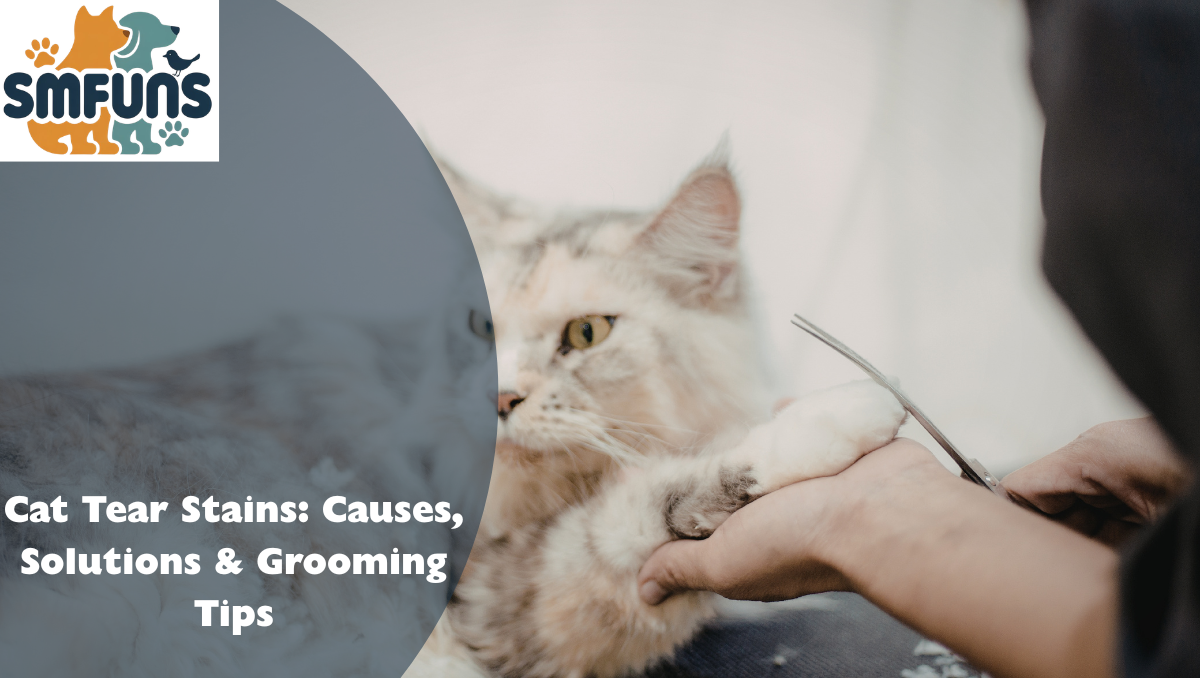
Keeping the fur trimmed under the eyes reduces the surface area where tears can cling. Professional grooming kits with rounded, pet‑safe scissors are ideal for carefully trimming these areas without nicking the skin.
Regular brushing also helps keep the area clean and prevents matting that can trap tears and moisture.
Hydration and Diet Improvements
Ensuring your cat stays hydrated can sometimes ease excessive tear production caused by dry eye or dietary irritants. Fresh water should always be available, and discussing diet changes with your vet can pinpoint triggers for tear issues.
Grooming Products That Help Prevent Tear Stains
Hypoallergenic Eye Wipes
Gentle wipes formulated for felines can remove tear buildup without harsh chemicals. They are perfect for daily use and can soothe irritated eyes.
At SMFuns, our high‑quality cleansing wipes are designed specifically for managing eye discoloration. Use them once or twice a day to help keep tear stains under control.
Tear Stain Removal Solutions
Specialized tear stain removers can help lighten existing stains. Look for products with mild, cat‑safe ingredients that don’t sting or dry out the skin. Apply with a soft cloth, following the manufacturer’s instructions.
Soft Grooming Brushes
Daily brushing with a soft brush not only removes loose fur but also prevents the accumulation of tear moisture around the face. This simple step minimizes staining and promotes overall facial cleanliness.
Nutritional Supplements
Certain supplements can support eye health and reduce tear staining. Omega fatty acids, for example, help maintain healthy skin and fur. Ask your veterinarian if supplements are appropriate for your cat.
Vet‑Recommended Practices
Regular Veterinary Checkups
Annual or biannual vet visits help detect eye issues early, before they become chronic problems. The American Kennel Club (AKC) notes that regular checkups help catch dental, tear duct, and allergy issues early, especially in breeds prone to tearing. https://www.akc.org/expert-advice/health/common-eye-conditions-in-cats
Rule Out Infections
If tear stains are persistent, a vet can test for infections or blocked tear ducts. In some cases, prescription eye drops or antibiotics may be necessary.
Allergy Testing
For cats with frequent irritation from environmental factors, allergy testing might reveal triggers you can control or avoid.
Preventing Tear Stains Before They Appear
Keep the Face Clean and Dry
Moisture breeds bacteria and staining. After cleaning tear residue, gently dry the area. Avoid excessive moisture around your cat’s eyes when bathing.
Maintain Grooming Consistency
Consistent eye cleaning and fur trimming prevent tear stains from becoming noticeable. It’s easier to prevent stains than to remove deep discoloration.
Monitor Environmental Triggers
Reducing allergens such as dusty litter, strong perfumes, or smoke can help lessen irritation. Consider switching to low‑dust, fragrance‑free litter and keeping your home well‑ventilated.
When to Seek Veterinary Care
Signs It’s More Than a Cosmetic Issue
If your cat shows any of the following signs, contact your veterinarian:
- Persistent watery eyes
- Thick, colored discharge
- Extreme redness or swelling
- Behavioral signs of discomfort
- Frequent blinking or squinting
Eye problems can escalate quickly if left untreated, so prompt veterinary attention is essential.
Safe and Effective Grooming Tips
Introduce Grooming Slowly
Cats can be sensitive about grooming, especially around the eyes. Introduce wipes and brushes gently, offering treats and praise to make the experience positive.
Use Cat‑Safe Products Only
Avoid human products near your cat’s eyes. Human eye wipes, shampoos, or cleaners may contain ingredients that are too harsh. Always choose products formulated for cats.
Keep Tools Clean
Regularly disinfect grooming tools to prevent bacterial buildup. Dirty brushes or cloths can introduce irritants that worsen tear stains.
Supporting Your Cat’s Overall Health
Balanced Nutrition
Healthy skin and eyes start with nutrition. A balanced diet rich in essential fatty acids supports tear quality and fur condition.
Hydration Counts
Cats often take in inadequate water, especially dry‑food eaters. Consider adding wet food or a feline water fountain to encourage drinking.
Stress Reduction
Stress can affect immune health, which, in turn, can indirectly affect tear production and eye comfort. Provide a calm environment with safe hideaways, playtime, and consistent routines.
Conclusion
Understanding cat tear stains is key to managing and preventing them in your beloved pet. While tear staining is often cosmetic, it can sometimes signal irritation or health concerns that deserve attention. Regular cleaning, attentive grooming, proper nutrition, and high‑quality hygiene products can greatly reduce staining and make your cat more comfortable. Investing in gentle eye care wipes, quality grooming tools, and consistent grooming routines promotes a cleaner, healthier feline companion.
At SMFuns, we offer a curated selection of grooming and eye care products designed to help you tackle tear stains effectively and safely. With the right approach and products made for cats, you can keep your furry friend’s eyes bright and their coat beautiful.
Take the first step toward healthier eyes today—explore our cat grooming and tear-stain care solutions at https://smfuns.com/ or call us at +19144085788. Your cat deserves comfort and clarity with every blink.
Call To Action: Explore quality pet care at SMFuns — https://smfuns.com/ | +19144085788
FAQs
Tear stains occur when tears overflow onto fur, often due to shallow tear ducts, breed traits, irritation, allergies, or infections. Addressing the underlying cause and maintaining eye hygiene reduces staining.
In many cases, tear stains are cosmetic. However, if staining persists or is accompanied by redness, discharge, or discomfort, consult a vet to rule out infections or a blocked tear duct.
Daily cleaning with a gentle, cat‑safe wipe is ideal. This removes tear residue before it oxidizes and stains the fur.
Yes. Poor diet and dehydration can contribute to tear issues. A high‑quality, balanced diet, along with hydration support, can promote healthier tears and skin.
Yes — specialized cat eye wipes, tear stain removers, and hypoallergenic grooming tools help manage and prevent staining. SMFuns offers cat‑friendly options designed for regular care.