


Cat Brushing Guide – The Complete Grooming Routine Every USA Cat Owner Needs
A proper cat brushing guide can completely transform your cat’s health, your home’s cleanliness, and your daily bonding routine. Many American cat owners struggle with loose fur on furniture, painful mats in long-haired coats, and cats that run away at the first sign of grooming. These problems usually come from using the wrong tools, brushing incorrectly, or brushing too rarely. Brushing is not just about appearance. It supports skin health, reduces hairballs, and helps detect early medical issues. The ASPCA cat care resource (https://www.aspca.org/pet-care/cat-care/general-cat-care) explains that routine grooming is essential for maintaining a healthy coat and preventing painful tangles. When done correctly and consistently, brushing becomes a calming experience your cat enjoys rather than fears.
Why Following a Cat Brushing Guide Is Essential for Your Cat’s Health
A consistent grooming routine removes loose hair, spreads natural oils, and keeps the coat smooth and breathable. Without regular brushing, dead hair collects near the skin, forming mats that pull and irritate. PetMD’s grooming and coat health resource (https://www.petmd.com/cat/grooming) highlights that matting can lead to skin infections, restricted movement, and excessive shedding. A structured cat brushing guide ensures that grooming is done in the right way and at the right frequency for your cat’s coat type. This is especially important for indoor cats in the USA, where climate-controlled homes can cause year-round shedding rather than seasonal coat changes.
How Often You Should Brush Your Cat
The frequency of brushing depends on coat length and density. Short-haired cats benefit from brushing once or twice a week, while long-haired cats need daily grooming to prevent tangles. According to VCA Animal Hospitals (https://www.vcahospitals.com/know-your-pet/cat-grooming), consistent brushing removes debris, reduces shedding, and improves circulation to the skin. Following a proper cat brushing guide creates a predictable routine that helps cats feel safe and relaxed during grooming sessions. Over time, most cats begin to associate brushing with attention and comfort.
Cat Brushing Guide for Choosing the Right Grooming Tools
The tools you use determine how effective your grooming routine will be. A slicker brush removes loose fur from the topcoat, while an undercoat rake reaches deeper layers where shedding begins. A soft-bristle brush adds shine and smoothness at the end of the session. The AKC grooming advice (https://www.akc.org/expert-advice/health/how-to-groom-a-cat/) confirms that using the right brush for your cat’s coat type is key to preventing mats and reducing hair spread in your home. High-quality grooming tools designed for comfort and safety, such as those available at SMFuns, make brushing faster and more enjoyable for both the cat and the owner.
Step-by-Step Cat Brushing Guide for Stress-Free Grooming
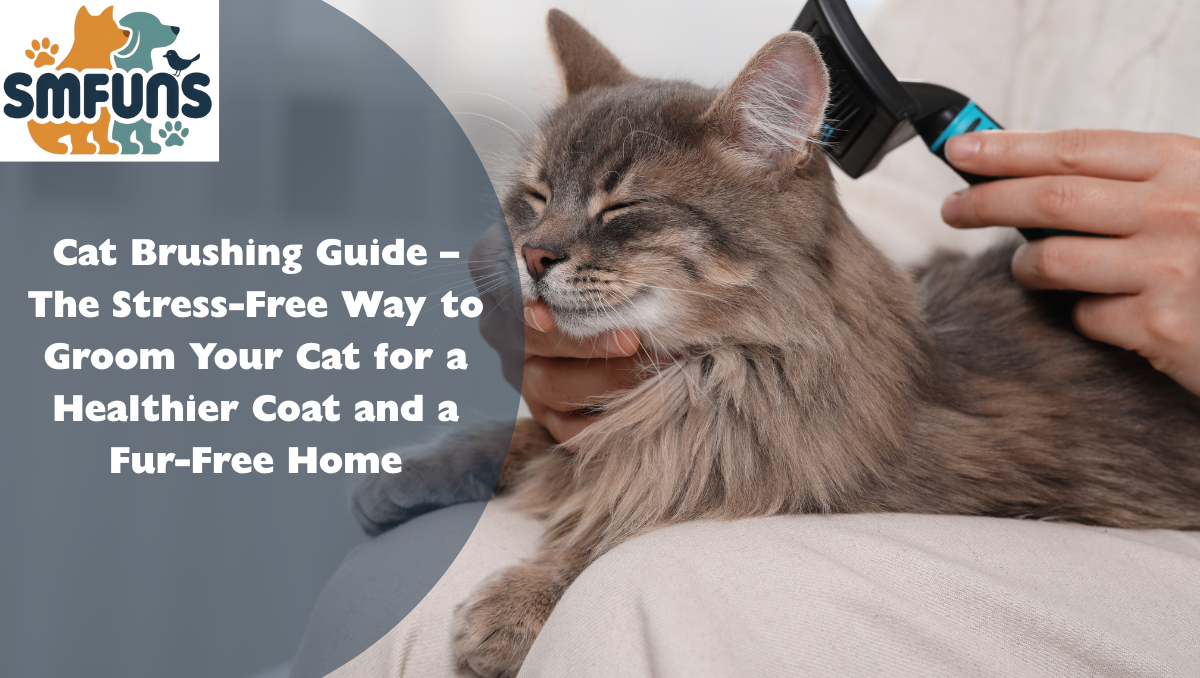
A successful grooming session begins in a calm environment. Start with gentle strokes along the back where cats are most comfortable being touched. Gradually move to the sides, chest, and tail. Always brush in the direction of hair growth to avoid pulling. The American Veterinary Medical Association’s grooming tips (https://www.avma.org/resources/pet-owners/petcare/cat-grooming-tips) emphasize patience and gentle handling to prevent stress and injury. A structured cat brushing guide turns grooming into a predictable routine, helping nervous cats feel more secure.
Cat Brushing Guide to Reduce Shedding and Hairballs
Loose fur is the main cause of hairballs because cats swallow it during self-grooming. Removing that fur through regular brushing significantly reduces digestive discomfort and vomiting. The Cornell Feline Health Center (https://www.vet.cornell.edu/departments-centers-and-institutes/cornell-feline-health-center) notes that coat maintenance plays a major role in overall feline health. When brushing becomes part of your weekly routine, you will notice less hair on your furniture, cleaner clothing, and a shinier coat. Using professional grooming tools and coat-care products available at SMFuns enhances these results and keeps the skin hydrated.
Creating a Positive Grooming Experience for Your Cat
Cats respond to calm energy and gentle handling. Choose a quiet time of day, use slow movements, and reward your cat with treats after each session. The CDC Healthy Pets Guide (https://www.cdc.gov/healthypets/pets/cats.html) also notes that regular grooming helps detect early signs of parasites, skin conditions, and abnormalities. Following a consistent cat-brushing guide builds trust and turns grooming into a bonding ritual rather than a struggle.
Common Cat Brushing Mistakes and How to Avoid Them
Many cat owners brush only the surface of the coat, leaving the undercoat untouched and allowing mats to form. Others use dog brushes that are too harsh for delicate feline skin. Brushing too aggressively or too infrequently also creates negative associations with grooming. A proper cat brushing guide ensures that each session is gentle, thorough, and effective. Investing in high-quality grooming tools prevents these mistakes and makes every session smoother and faster.
Seasonal Shedding and Coat Changes in the USA
Indoor cats often shed year-round, but shedding increases in spring and fall. During these periods, brushing frequency should increase to remove the thick undercoat. The ASPCA and the AKC both emphasize that seasonal grooming helps prevent excessive hair buildup in the home. A consistent routine, supported by professional-grade grooming products, helps maintain a clean environment and a healthy coat even during heavy-shedding months.
Long-Haired vs Short-Haired Cats – Different Brushing Needs
Long-haired cats require daily grooming because their fur tangles quickly and traps debris. Short-haired cats shed less visibly but still need regular brushing to remove loose hair and stimulate the skin. Pet parents in the USA often underestimate the grooming needs of short-haired cats, which leads to increased shedding and hairballs. Following a tailored cat brushing guide for each coat type ensures the best results.
Building the Perfect Weekly Grooming Routine
A complete grooming routine includes gentle daily brushing for long-haired cats, deeper undercoat removal several times a week, and a finishing brush that smooths and distributes natural oils. Consistency is the most important factor in maintaining coat health. High-quality grooming tools and hygiene products from SMFuns make it easier to maintain this routine and achieve professional results at home without the cost of frequent grooming appointments.
Conclusion – A Healthier Coat and a Cleaner Home Start With the Right Cat Brushing Guide
Following a proper cat brushing guide is one of the most effective ways to improve your cat’s health, reduce shedding, and create a cleaner home environment. Brushing removes loose fur, prevents painful mats, reduces hairballs, and strengthens the bond between you and your cat. For USA pet owners who want safe, fast, and professional grooming results at home, using premium grooming tools and coat-care solutions makes all the difference. Explore the high-quality grooming essentials at SMFuns and turn your cat’s grooming routine into a relaxing and rewarding daily ritual.
Shop now:
https://smfuns.com/
Call or text: +19144085788
FAQs
Short-haired cats should be brushed several times a week, while long-haired cats need daily grooming.
A slicker brush for loose fur and an undercoat rake for deep grooming provide the best results.
Cats usually resist brushing when it pulls their fur or when sessions are too long or stressful.
Yes, removing loose fur before your cat swallows it significantly reduces hairball formation.
Indoor cats shed year-round and require regular grooming to maintain a healthy coat and clean home.